Myofascial Energetic Release Training Explained: What Is Myofascial Energetic Release Training and How Does the MER Path Work?
What You Learn How Certification Works and Who It Is For
Myofascial Energetic Release Training is a seven-module professional bodywork pathway created by Satyarthi Peloquin. It teaches practitioners to combine fascia-focused deep touch with breath, movement, assisted stretching, body reading, myofascial unwinding, verbal guidance and meditation. The complete pathway includes seven six-day modules, two online courses and 60 documented practice sessions, for a total of 450 certified hours.
In one sentence MER trains practitioners to work with the body as an interconnected system and to involve the client actively in the process through breath, movement, awareness and feedback.
MER training at a glance
- Structure Seven in-person modules plus two online courses
- Training hours Seven modules of approximately 50 hours each, 90 hours of documented practice and 10 hours of online study
- Total pathway 450 certified hours
- Module order Students may begin with any module and complete the modules in any order
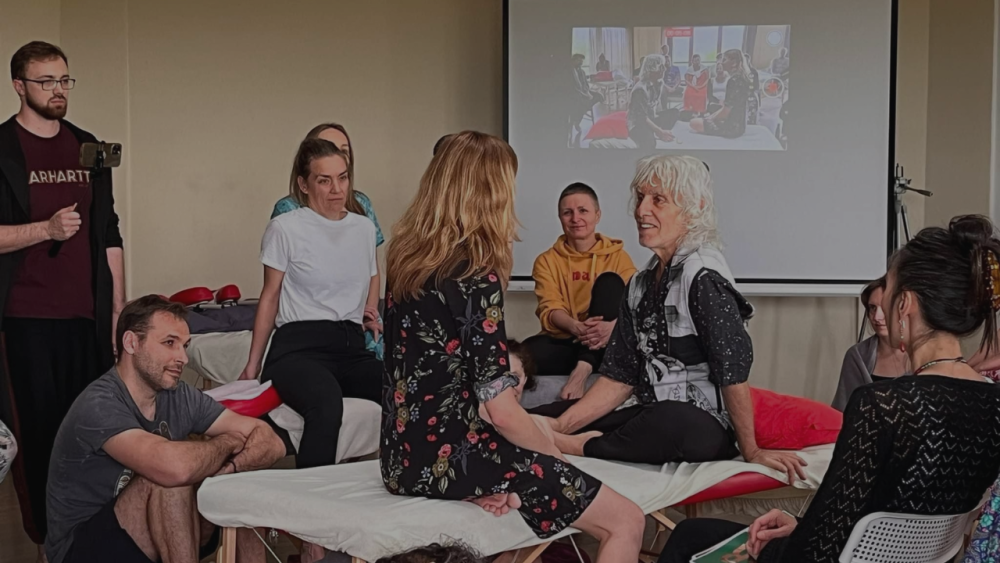
- Teaching format Theory, demonstrations, supervised partner practice, meditation, manuals and recorded demonstrations
- Entry level Open to established practitioners and beginners who want professional bodywork skills
- Credential A certificate of completion stating the training hours completed
What is Myofascial Energetic Release training
Myofascial Energetic Release, known as MER, is an integrative method of deep bodywork developed by Satyarthi Peloquin through more than five decades of practice and teaching. The method brings together precise touch, fascial work, assisted movement, breath, meditation and client participation.
A practitioner does not approach the painful area as an isolated problem. They learn to observe posture, breathing, movement, soft-tissue tone and the way different regions influence one another. The aim is to understand the pattern around the symptom and create a session that responds to the whole person.
MER is also experiential. Students receive sessions, practise under supervision and learn through their own physical responses. This develops technical skill alongside the sensitivity required for safe, responsive touch.
Why fascia matters in MER
Fascia is part of the body's connective-tissue system. It surrounds, separates and links muscles, nerves, blood vessels and internal structures. Researchers describe the fascial system as a continuous three-dimensional network that contributes to structural support and coordination across the body. Research on the definition of the fascial system provides useful anatomical context for this whole-body perspective.
Persistent pain is rarely explained by one tissue alone. It is influenced by many factors, including injury, load, sleep, stress, movement, expectations and nervous-system sensitivity. MER therefore uses fascia as an important lens without reducing every symptom to a single cause.
The same care is needed when speaking about emotions. Fascia does not literally store memories in the way the brain does. Stress and emotion can nevertheless influence breathing, muscle tone, posture, guarding, movement and pain perception. MER works with these observable body responses while respecting the difference between bodywork and psychotherapy.
What makes MER different from conventional massage
Conventional massage can include many valuable approaches, from relaxation work to targeted soft-tissue treatment. MER is distinguished by the way it integrates assessment, deep touch and the client's active participation within one method.
- Whole-body assessment Body reading, palpation, movement observation and the client's own description help shape each session.
- Listening touch Pressure, direction and pace are adjusted in response to the tissue and the client's feedback rather than applied as a fixed routine.
- Pro-Active Participation The client may use breath, movement, sound and verbal awareness instead of receiving the session passively.
- Integration Deep bodywork, assisted stretching, joint mobilisation, myofascial unwinding, meditation and verbal guidance are taught as parts of one coherent system.
- Education Practitioners learn to help clients recognise habits of holding, breathing and movement that may contribute to recurring tension.
What students learn
The curriculum is organised around eight areas of instruction. These areas return throughout the seven modules so that knowledge is repeatedly applied in demonstrations, supervised exchanges and home practice.
1. Anatomy and physiology The fascial system, relevant soft-tissue anatomy and the relationships between structure, movement and pain.
2. Deep bodywork and functional assessment Body reading, palpation, listening hands, pressure, body mechanics and session design.
3. Movement education and myofascial unwinding Assisted movement, spontaneous movement responses and ways to support integration after deep work.
4. Breath and somatic psychology How breathing patterns, awareness and verbal guidance can be used responsibly within bodywork.
5. Working with pain syndromes How to assess common patterns and adapt touch without claiming to diagnose or cure medical conditions.
6. Business and marketing Foundations for developing a professional practice and communicating the work clearly.
7. Professional ethics Consent, boundaries, scope of practice, referral and respectful practitioner-client relationships.
8. Meditation Presence, self-awareness and the ability to stay responsive while giving a session.
The seven modules
Each module explores a different region or therapeutic theme while continuing to train full-session skills. Modules may be taken in any order.
1. Self-Empowerment Back, neck, pelvis and breath
2. Grounding Feet, legs and hips
3. Centering Pelvis and core integration
4. Original Face Face, cranium, neck, breath and arms
5. Inspiration Opening the breath through the thorax and diaphragm
6. Fluid Body Joint release and joint mobilisation
7. Trauma Release Breath, fascia, emotional awareness and self-regulation
How the certification pathway works
The full pathway combines 350 hours of in-person module training, 90 hours of documented practice sessions and 10 hours of online study. Students complete two online courses covering Body Reading and Character Types, and Trauma and the Nervous System. Together, these elements make up 450 certified hours.
Between modules, students complete at least 60 documented sessions of 90 minutes. This practice period is not an administrative extra. It is where touch becomes more precise, session planning becomes more coherent and feedback can be integrated into the next stage of training.
After completing the requirements, students receive a certificate of completion showing the number of hours trained. The certificate does not replace a statutory medical or healthcare licence. Graduates remain responsible for local legal requirements, insurance and the professional scope that applies in the country where they practise.
Who the training is for
MER is designed for people who want to develop skilled, relational and whole-body work. It can deepen an existing practice or provide a structured route into professional bodywork.
- Bodyworkers and massage therapists Practitioners who want a more integrated approach to fascia, breath, movement and client awareness.
- Physiotherapists and osteopaths Professionals seeking additional hands-on and somatic perspectives within their existing scope.
- Yoga and movement teachers Teachers who want a clearer understanding of touch, posture, mobility and embodied learning.
- Breathworkers and somatic practitioners Practitioners who want to connect breath and awareness with precise manual work.
- Wellness professionals and career changers People prepared to undertake supervised practice, ethics training and the full certification pathway.
What the evidence can and cannot say
Research on conventional myofascial release suggests that it may support some pain and function outcomes, but results vary by condition, technique and study quality. For example, reviews of chronic low-back-pain trials have reached different conclusions about the size and consistency of the benefit. See the 2021 review by Wu and colleagues and the 2021 review by Chen and colleagues for examples of this developing evidence base.
MER as a complete method combines myofascial techniques with breath, movement, meditation and emotional awareness. This full combination has not yet been established through large clinical trials. It is therefore more accurate to describe MER as a professional bodywork and educational approach that aims to support pain relief, mobility, body awareness and self-regulation, rather than as a proven treatment for every condition.
Persistent, severe or unexplained pain requires appropriate medical assessment. MER should complement, not replace, medical diagnosis, physiotherapy, psychotherapy or other regulated healthcare when these are needed.
Frequently asked questions
Do I need previous bodywork experience
No. The training is open to beginners as well as experienced practitioners. Beginners should be prepared for intensive hands-on learning, supervised practice and continued study between modules.
Can I begin with any MER module
Yes. The seven modules may be completed in any order. Each module has its own regional or thematic focus while teaching skills that can be integrated into a complete session.
How long does MER certification take
The timeline depends on how frequently a student attends modules and completes practice sessions. The full pathway requires seven six-day modules, 60 documented 90-minute sessions and 10 hours of online study.
Is MER the same as myofascial release
MER includes fascia-focused manual techniques, but it is broader than a standalone myofascial release technique. It also integrates breath, movement, assisted stretching, joint mobilisation, meditation, body reading, myofascial unwinding and verbal guidance.
Does fascia store emotions
Fascia does not literally store memories. Emotional stress can influence breathing, muscle tone, posture, guarding, movement and pain perception. MER works with these embodied responses while keeping clear boundaries between bodywork and psychotherapy.
What qualification do graduates receive
Students who complete the pathway receive a certificate of completion stating their training hours. They must still follow the licensing, insurance and scope-of-practice rules that apply where they work.
Where can I take MER training
MER modules are offered through official training organisers in Europe. Dates, locations, teachers and booking information are updated on the MER events calendar.
Begin your MER training path
A strong bodyworker needs more than a collection of techniques. The work asks for anatomical understanding, precise touch, clear boundaries and the ability to listen while the body responds. MER develops these qualities through direct experience, disciplined practice and a complete whole-body training structure.
Explore the MER Professional Training or view upcoming training dates to find the next module.
Sources and further reading
- Official MER training structure
- MER training curriculum
- Satyarthi Peloquin and the development of MER
- Defining the fascial system
- Myofascial release for chronic low back pain
- Effects of myofascial release for low back pain
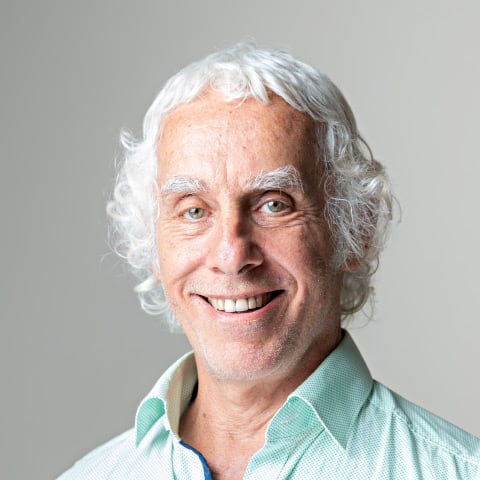
Author - Satyarthi Peloquin
Trainer